
Luxury interior design is the work of making a home feel considered in every detail. It rests on proportion, honest materials, layered light, quiet craftsmanship and a clear point of view. A high-end home does not announce itself. It simply feels calm, finished and made for the people who live there. Here is how we think about each of those elements, and how you can bring them into your own home.
The Principles of Luxury Interior Design
When people describe a home as high-end, they rarely point to one expensive object. They describe a feeling of balance. That feeling comes from a short list of decisions made well and made consistently: scale, materials, light, detail and cohesion. The rest of this guide takes each one in turn.
Proportion and Restraint
Proportion is the foundation of a luxurious room. Furniture is sized to the space, with room to breathe around each piece. Ceilings, windows, rugs and art are scaled to one another, so nothing feels too large or too small.
Restraint matters just as much. A high-end room is edited. Every piece has earned its place, and surfaces are left open so the eye can rest. If a room feels busy, the usual answer is to remove something rather than add it.
Materials That Age Well
Materials carry much of the sense of luxury, and the best ones improve with time. Natural stone, plaster finishes, solid wood, linen and wool develop character with use, which is why they appear again and again in homes that feel established.
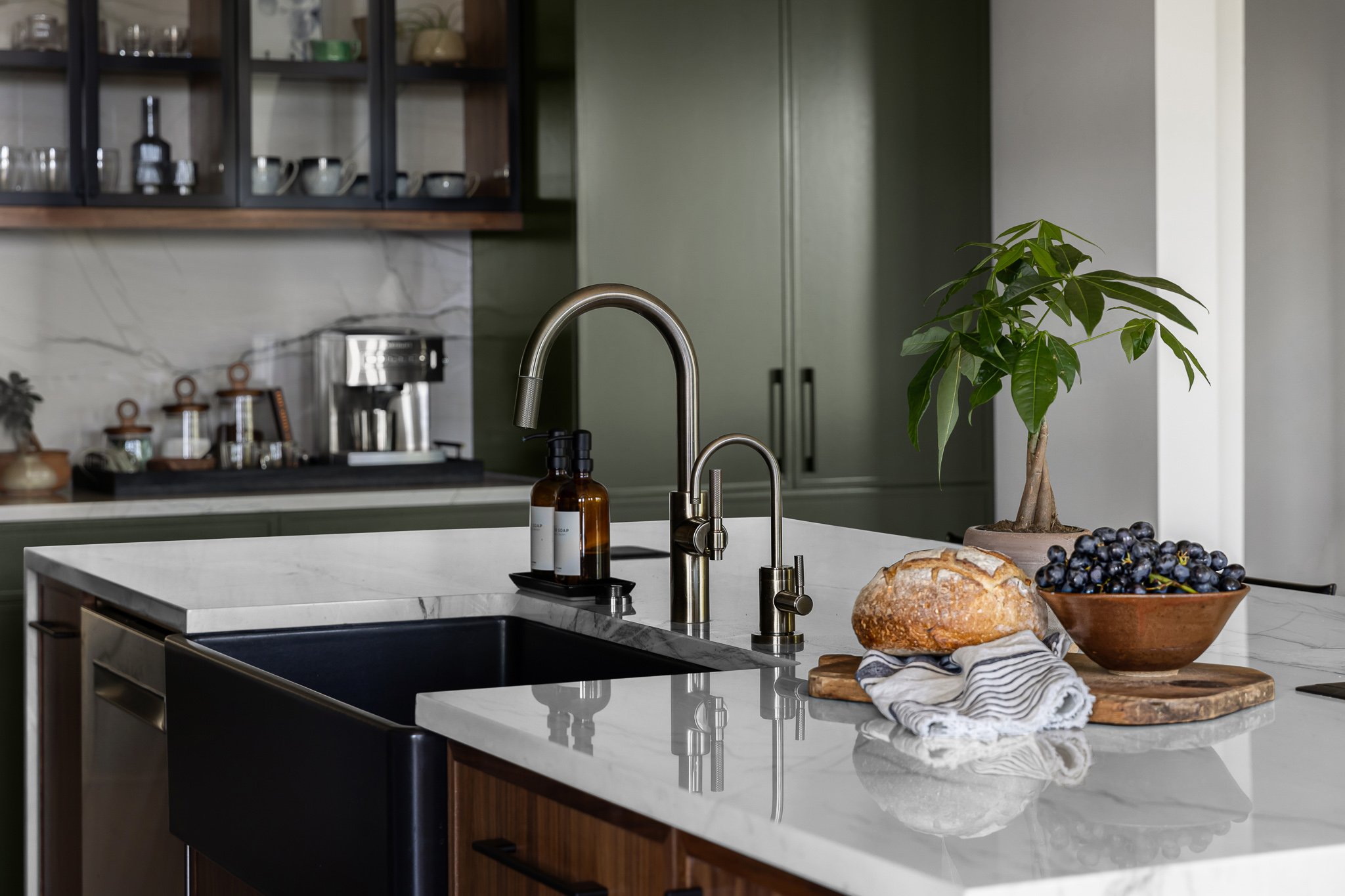
We return to this idea often. As we describe in our signature material palette, honest textures such as limewash, reclaimed wood, stone and linen give a home depth that new, glossy finishes rarely match. Keep the palette tight, and let texture do the work.
Light That Shapes the Mood
Lighting is the quickest way to tell a high-end interior from an ordinary one. Flat, even overhead light makes a beautiful room feel institutional. Layered light does the opposite. Soft ambient light, focused task light and gentle accent light, ideally each on its own dimmer, let a room shift from bright morning to quiet evening.
Natural light deserves the same attention. Consider how the sun moves through each room, and plan mirrors, furniture and art around it. Our guide to layered lighting design walks through how the layers work together.
Craftsmanship in the Details
Luxury lives in the details that are easy to overlook: cabinetry that fits the architecture, hardware with some weight to it, trim and millwork that frame a room, and furniture built to last. These details are rarely the first thing a guest notices, and they are the reason a room feels right.
Custom work is often where a home gains its identity. A built-in wall of shelving, a made-to-order vanity or a table sized for one particular room all show that the space was designed for the people in it, rather than assembled from what was available.
A Home That Tells Your Story
The most memorable high-end homes are personal. They reflect the people who live there, through art, collected objects and a palette that feels like theirs.
Our Big View project is a good example. The home is arranged as a living gallery around the homeowners' rare global artifacts, and its palette is grounded in the surrounding landscape. The result feels collected and rooted in its setting, and nobody could mistake it for anyone else's home.
Cohesion From Room to Room
A high-end home reads as one idea. Materials repeat, colors relate and the transitions between rooms feel natural. This is where many homes fall short. Each room may be lovely on its own, yet the whole lacks a thread.
Cohesion comes from planning the entire home together, which is the idea behind our luxury interior design in Austin process. One point of contact carries the concept from discovery through sourcing and installation, so decisions made in one room still make sense in the next.
Comfort Comes First
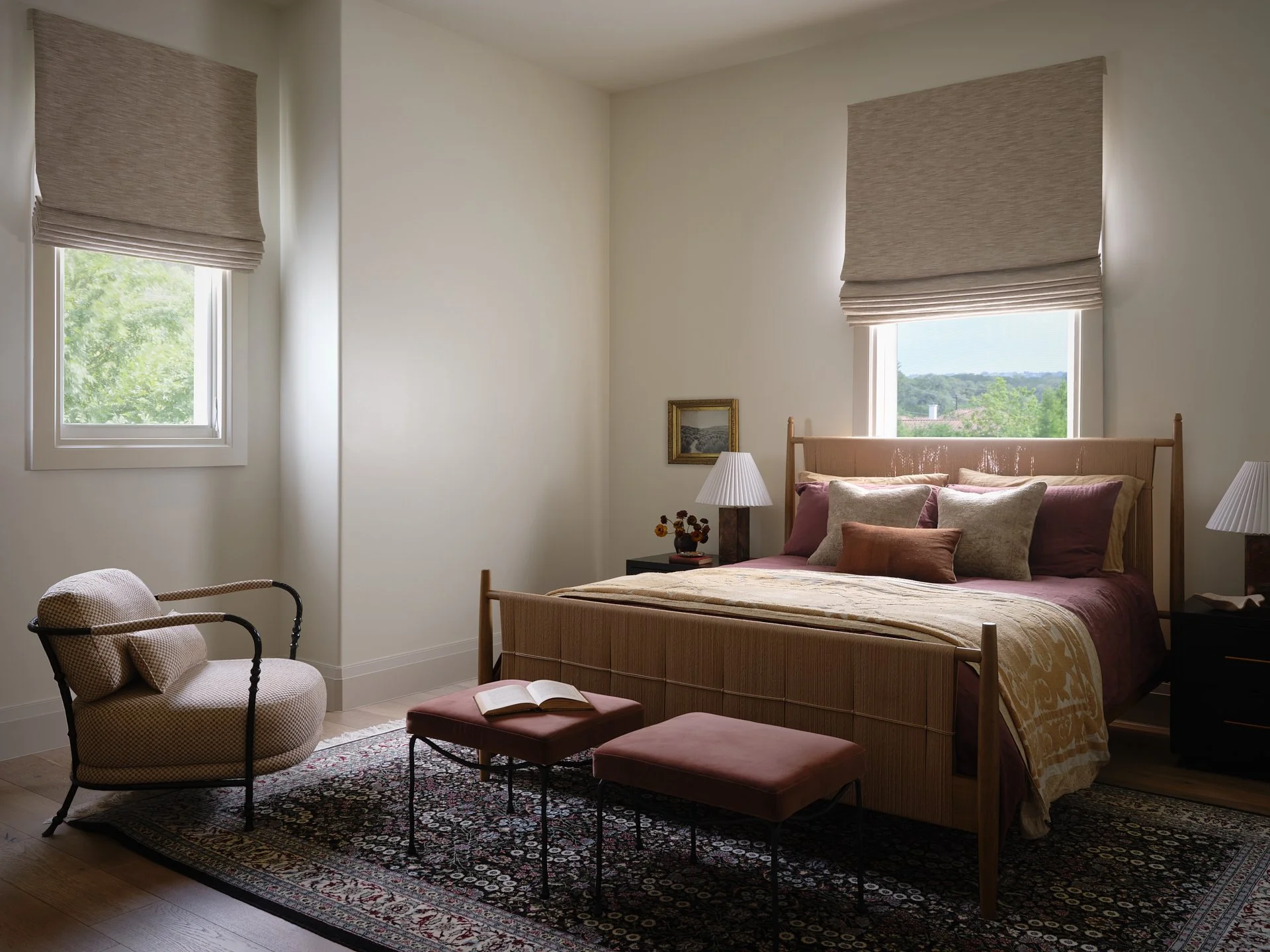
A room that is beautiful and uncomfortable is not luxurious. The most elevated homes are easy to live in. Seating is deep enough to sink into, storage is planned so surfaces stay clear and every room works for the way the household really lives. Elevated spaces and functional living belong together.
What to Look for in High End Interior Designers in Austin
If you are choosing a designer for a high-end home, a few signs are worth looking for.
A portfolio with range and a consistent point of view. Look at finished homes, not only styled photographs.
A clear process. You should know what happens in each phase and who is responsible for it.
Collaboration with architects and builders. The best results come when the interior is considered early.
Recognition from peers and publications. Our studio has been named Austin Home's Best Interior Design for 2022, 2023, 2024 and 2025, and you can see our features on our Press page.
A good conversation. You should feel heard from the first call.
Common Mistakes That Keep a Home From Feeling High-End
Buying pieces one at a time, with no plan. Decide the whole direction first.
Choosing trends over materials. Trends fade, and good materials stay.
Underscaling. Small rugs, small art and small lighting make a room feel unfinished.
Relying on one overhead light. Layer the light and use dimmers.
Over-decorating. Edit until every piece has room to be seen.
Frequently Asked Questions
What is luxury interior design?
It is a thoughtful, cohesive approach to a home, built on proportion, quality materials, layered lighting, custom details and a personal point of view. The goal is a home that feels finished and works well for daily life.
What makes a home look expensive?
Usually it is restraint and quality rather than quantity. Well-scaled furniture, natural materials, warm layered light and consistent details make a home look expensive far more than any single costly item.
Does luxury design mean a very large home?
No. A well-designed apartment or a single room can feel luxurious. Scale and budget matter less than careful decisions made consistently.
What materials feel the most high-end?
Natural stone, plaster, solid wood, linen and wool are common choices because they develop character as they age. Choose materials that suit how you live.
Do I need a designer to create a high-end home?
You can achieve a lot on your own, but a designer helps you plan the whole home as one idea, source quality pieces and avoid costly mistakes. Our full-service process handles the project from concept to final styling.
How do I find high end interior designers in Austin?
Review portfolios of finished homes, ask about process and collaboration, and look for recognition from local and national publications. A first conversation will tell you a great deal about fit.
Let's Design a Home That Feels Like Yours
If you are planning a home that feels elevated and made for the way you live, start your project with our studio and let's work together.
Related Posts
To see these ideas applied to one room, read Luxury Living Room Design: How to Create a Room That Feels Elevated and Lived-In. For a closer look at one of the most personal spaces in a home, see Primary Bathroom Design: How to Create a Spa-Like Retreat at Home.
